

It does not absorb liquids or gases
Cork Materials for Modern Australian Architecture & Industry
From desert industrial sites to coastal homes — natural thermal performance, durability and sustainability for Australian conditions
The material
About Cork
Cork is the natural bark of the cork oak tree — a remarkable material unlike anything else found in nature. Each cubic centimetre of cork contains around 40 million microscopic cells, each filled with a clean, elastic gas similar to the purest mountain air. This cellular structure is the secret behind cork’s lightness, resilience, and exceptional performance.

History
A Material Honoured for Centuries
For thousands of years, people have recognised cork’s unique properties. Ancient civilizations used it for vessel stoppers, fishing floats, footwear, and even ship rigging. Its defining moment came in the 17th–18th centuries, when wine began to be bottled and sealed with cork — a discovery that transformed wine preservation forever.
The traditional wine cork remains the perfect demonstration of cork’s natural advantages:
It resists mold, rot, and decay
It maintains long-term shape memory
It is naturally elastic and durable
Properties
Why Cork Performs So Well
Cork combines a rare set of characteristics that no synthetic material can replicate:
Soft yet strong
Absorbs impact while maintaining structural integrity
Naturally warm
Low thermal conductivity keeps surfaces comfortable
Moisture-resistant
Does not absorb water or swell
Slip-resistant
Ideal for flooring, decking, and wet areas
Fire-resistant
Slow to ignite and does not release toxic fumes
Odour-neutral
Does not absorb or retain smells
Lightweight
Floats in water due to its sealed cellular structure
Highly wear-resistant
Excellent friction and abrasion performance
Origin
Where Cork Comes From
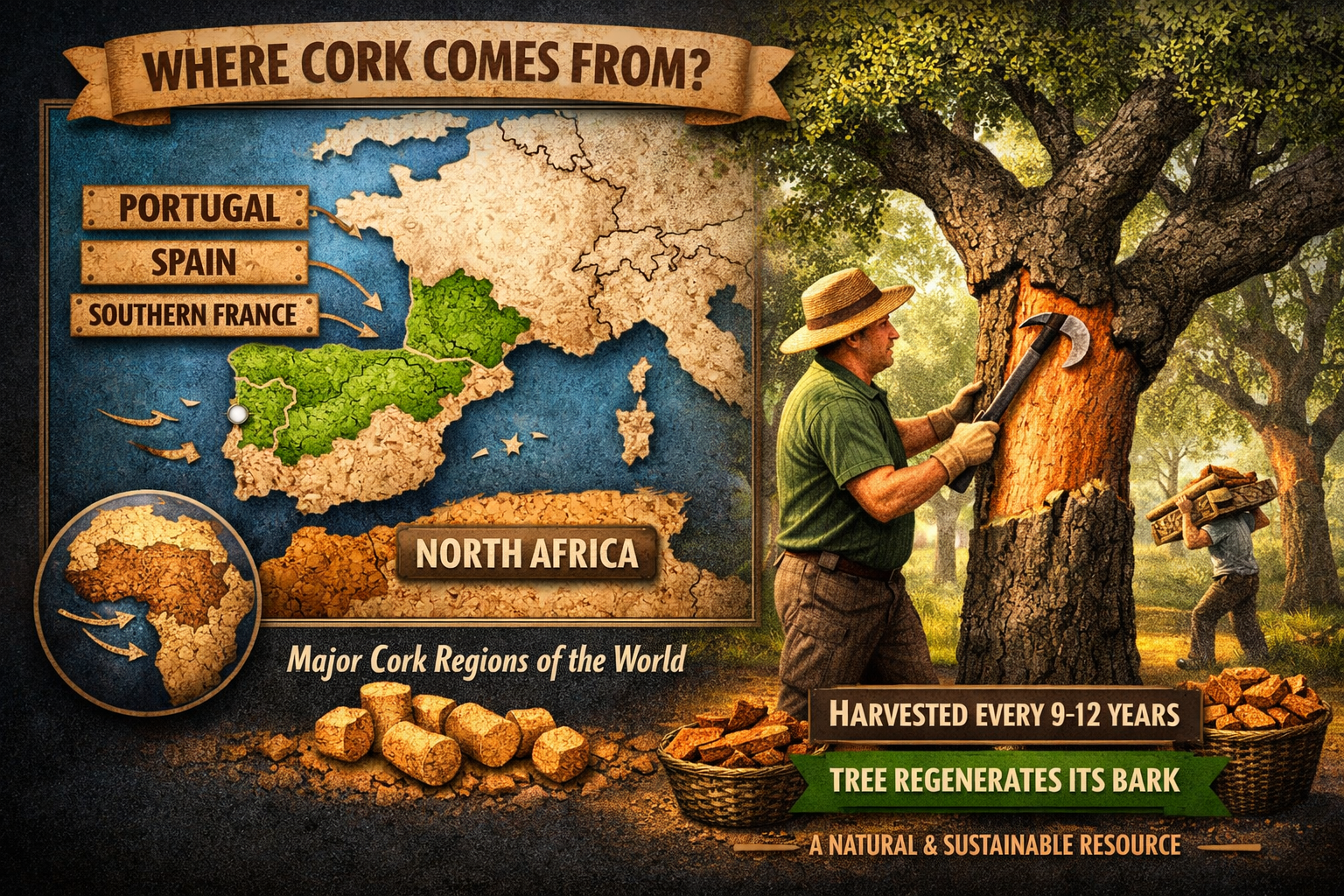
Cork oak forests grow primarily in Portugal, southern France, and Spain, with more than half of the world’s cork originating in Europe. The remaining production comes from North Africa, where cork oak forests thrive in the Mediterranean climate.
The bark is harvested every 9–12 years, depending on climate and growing conditions. The tree is never cut down — it regenerates its bark naturally, making cork one of the most sustainable materials on earth.
Uses
Applications Across Industries
Thanks to its unique properties, cork is used in a wide range of sectors:
Automotive and shipbuilding industries
Aerospace — gaskets, adapters, vibration-damping components
Machinery requiring vibration reduction
Refrigeration and cooling systems
Packaging and transport of fragile goods
Wine and alcohol industry
Construction and architecture
Interior design and decorative finishes
Thermal and acoustic insulation for buildings and equipment
Anatomy
The Structure of Cork
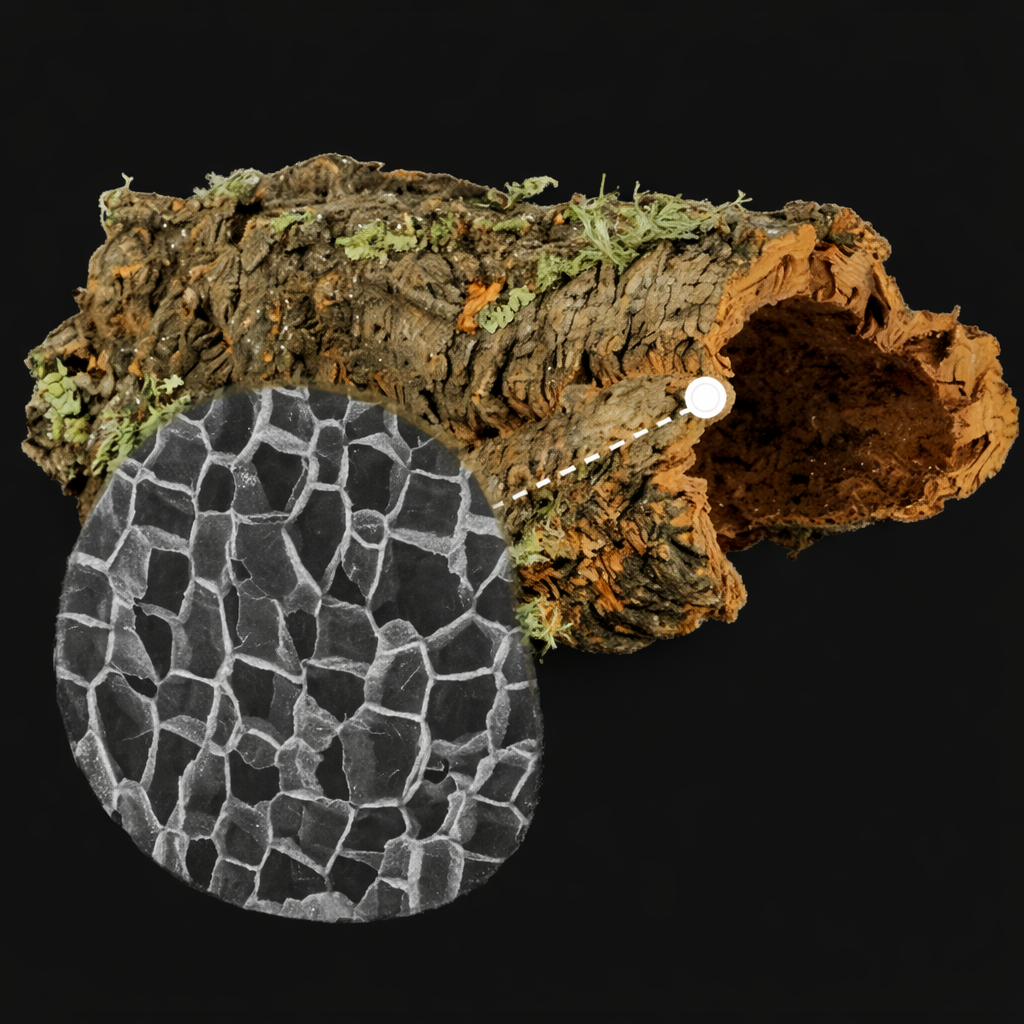
Cork’s internal structure resembles a natural honeycomb. Each cell is a tiny, airtight capsule filled with a gas that differs from atmospheric air — notably, it contains no carbon dioxide. This structure gives cork its elasticity, buoyancy, insulation properties, and resistance to moisture.
It is difficult to say which is more extraordinary: the cork oak’s ability to regenerate its bark, or the bark’s unparalleled performance as a natural material.
Make an Enquiry
We make specification easy by understanding your projects' needs and giving you the best solutions - at all stages and with all collaborators involved. We can provide you with pricing, lead times, samples, digital tools and technical resources. Talk to us today.