

Cork Indoors: Beyond the Feature Wall
Think of cork and a pinboard or natural-brown wall may come to mind. Today's interior cork range is much broader. Cork appears in panels, sheets, decorative sprayed finishes and flooring, giving it a role in the way a room works as well as the way it looks.
Its appeal begins with the material itself. Cork is lightweight and resilient, with a cellular structure made up of tiny air-filled spaces. Those qualities make it interesting for surfaces people walk on, work beside and use every day.
Walls that do more than decorate
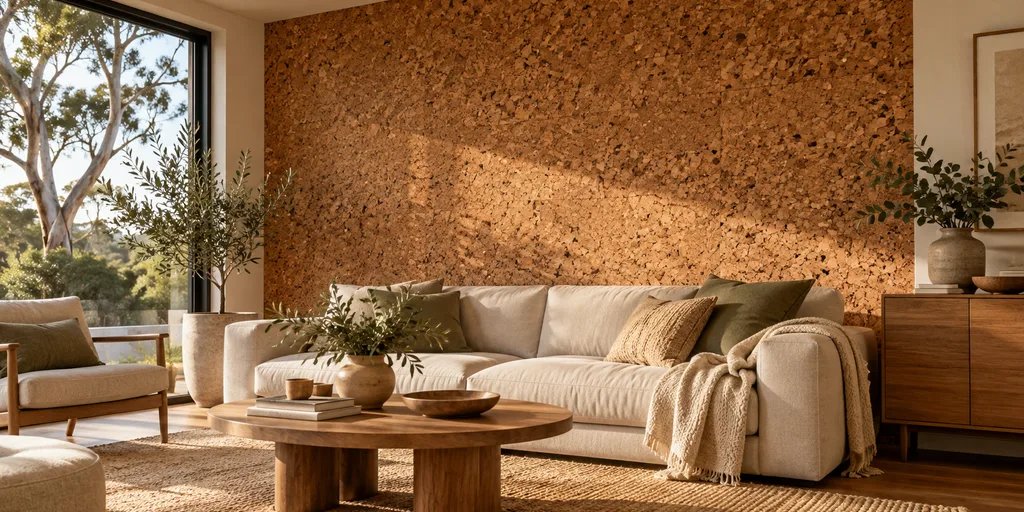
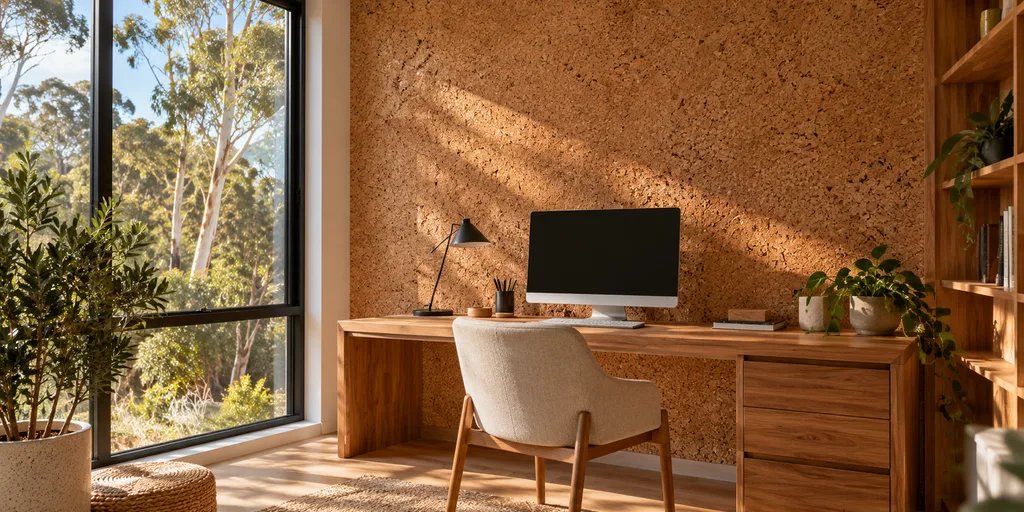
Cork wall panels can turn an ordinary stretch of wall into an intentional architectural element. They work behind seating, along a corridor or across a home office wall where a more substantial surface is welcome.
Panels bring their own rhythm through joins, sizes and installation patterns. A sprayed cork finish creates a different effect: a more continuous surface that follows the shape of the wall. Both are part of the cork family, yet each has a distinct role in the finished room.
Consider the sound of a room
Open-plan living areas and home offices can feel busy when conversation, calls and everyday activity overlap. Cork is well known for its sound-damping potential, and purpose-designed cork acoustic products are used in interior applications.
That makes cork especially relevant when planning meeting areas, working spaces or rooms with hard reflective surfaces. The choice of panel, backing and wall build-up shapes the acoustic result, so the application can be designed around how the room is actually used.
Cork belongs underfoot, too
Flooring is another important side of indoor cork. Its resilient structure gives cork floors a characteristic feel underfoot, making the material attractive for living areas and rooms where people spend time standing or walking.
A floor is a working surface, so finish, cleaning routine, foot traffic and furniture movement all deserve attention in the product choice. Indoor cork flooring is its own category, with different requirements from a wall panel or decorative coating.
Forget the idea that cork must be brown
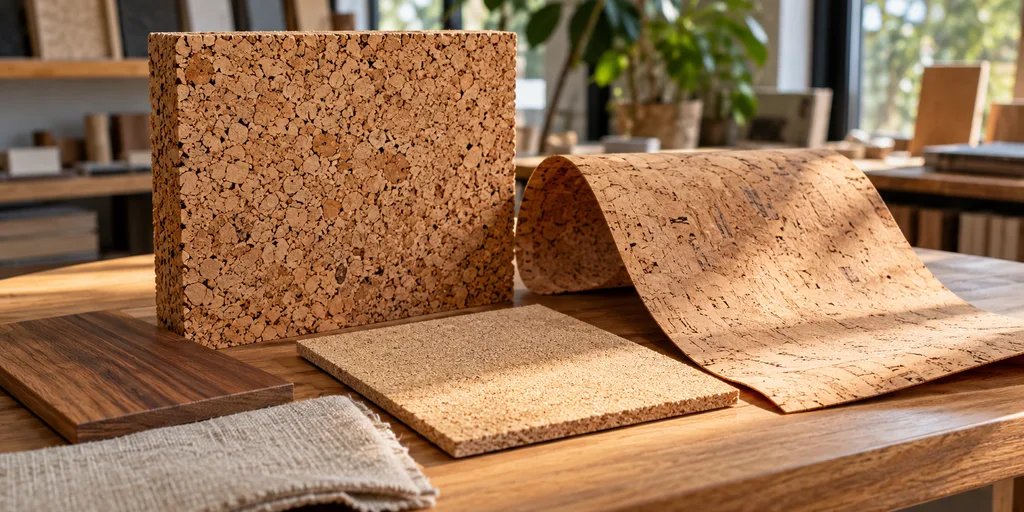
Natural cork has a beautiful identity, but it isn't the only possible look. Cork coatings and finishes can be produced in a variety of colours, while panels introduce different grains, formats and visual rhythms.
Colour makes cork useful far beyond earthy interior schemes. A light finish can be understated across a large wall; a saturated accent can mark out a work zone; darker tones can create a strong architectural backdrop. There is room for playful, contemporary applications as well as natural ones.
Choose the format to suit the space
For a large continuous wall, a sprayed finish gives a unified appearance. For defined modules or a wall with a strong surface pattern, panels make sense. For areas underfoot, choose a purpose-made flooring product. Thinking in terms of how the surface will be used is more useful than choosing cork from a photograph alone.
Cork's versatility is its real strength indoors. It can shape a room, soften its everyday atmosphere and become part of how the space functions — without every cork installation looking the same.
