

Reuse Before Replacement: Rethinking Outdoor Surfaces
An outdoor area can start to feel worn out long before the structure beneath it has reached the end of its useful life. A faded patio, stained concrete path or dated entertaining area can make the entire garden look tired. The instinct is often to remove everything and start again. But there is another way to approach the project: keep what works, improve what doesn't and give the space a new surface.
Look beneath the tired appearance
Discolouration, old coatings and surface grime are not the same as structural failure. A solid base offers something valuable: an established shape, levels and connections to the house and garden. Once those elements are sound, attention can shift to how the area looks and feels in everyday use.
Some surfaces need more than a refresh. Loose slabs, widespread movement, persistent moisture and damaged drainage require repairs or reconstruction before a finish is considered. Identifying those issues early makes the renovation more coherent.
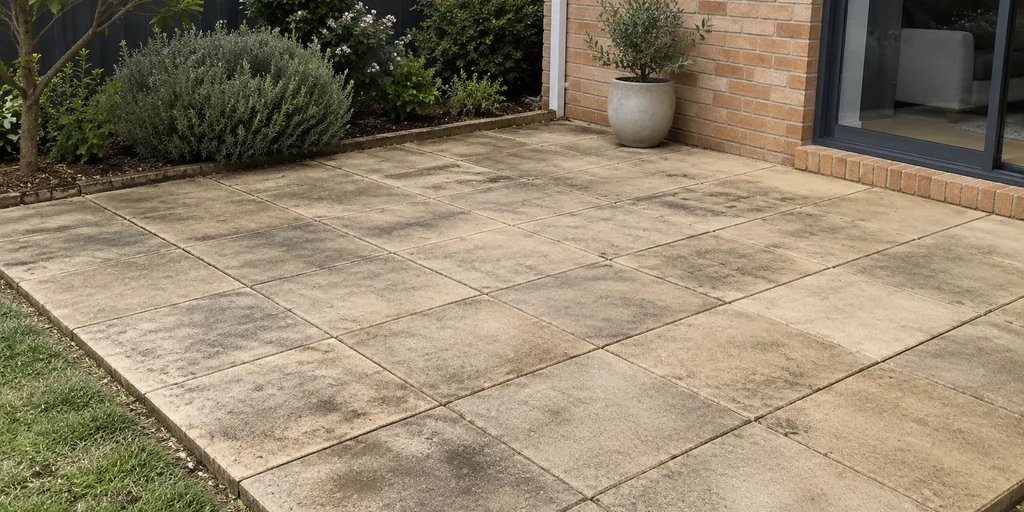
A coating can change the character of the space
A cork-based outdoor coating introduces an entirely different finish without relying on a new pattern of individual pavers. Fine cork granules form part of a spray-applied formulation that produces a continuous, subtly textured surface. On a suitable prepared substrate, it can be part of a renovation that brings separate outdoor areas into a more unified design.
This is especially appealing around a patio, a sheltered entertaining area or the route between the back door and garden. The coating becomes part of the overall surface treatment, rather than one more decorative object competing for attention.
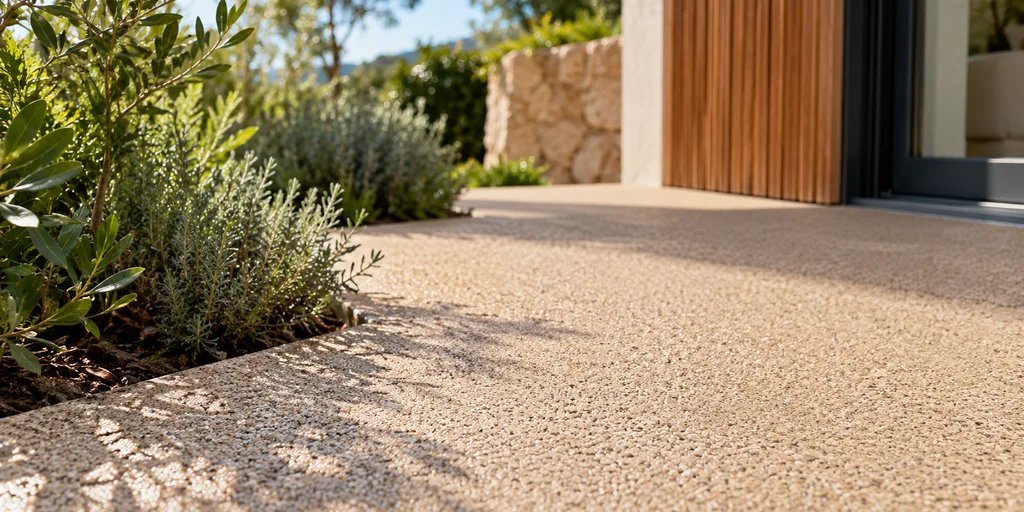
Rethink the layout while you renovate
A surface renovation is an opportunity to improve how the outdoor area works. A direct walkway to the garden, a clear transition at the door and a comfortable space around the dining table can make a greater difference than replacing a material simply because it is old.
Pay attention to edges, changes in level and where rainwater travels. Existing steps, garden beds and drainage points shape the finished space. When these details are planned together, the refreshed surface feels like part of the architecture rather than an afterthought.
Colour can make an old area feel new
Cork finishes are not limited to the familiar brown of natural cork. Coloured coating systems allow a variety of design directions. A pale, stone-inspired finish gives a compact courtyard a lighter appearance. A deeper neutral can define an outdoor lounge, while an earthy shade can connect a path with surrounding planting.
The most effective colour is one that works with the elements already staying: brickwork, paving edges, timber, fencing and the garden. Reuse becomes a design advantage when old and new parts feel intentional together.
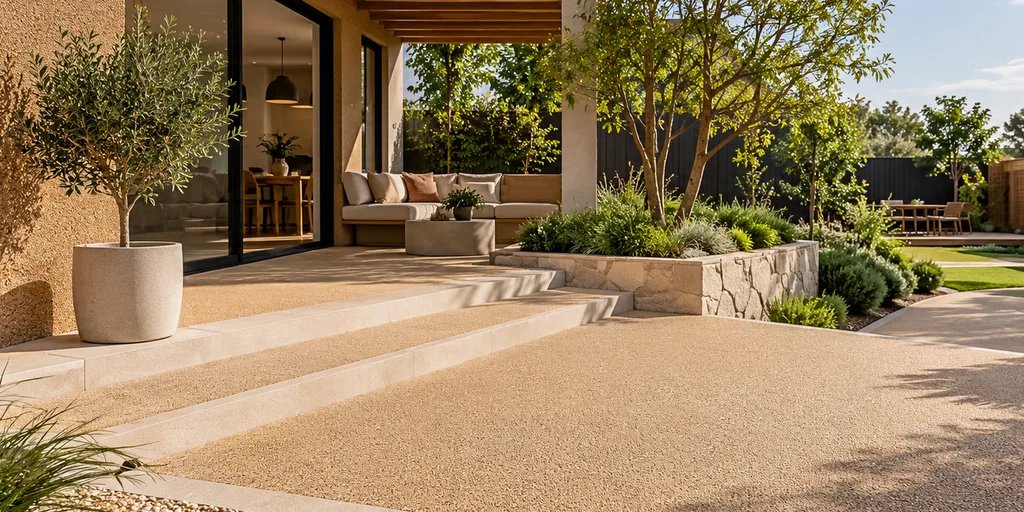
Keep the useful parts, improve the experience
Replacing a failed base is sometimes the right choice. Yet removing a sound surface simply because its finish is dated can mean rebuilding elements that already work. The more thoughtful approach begins with the condition of the site, then considers the finish and its role in daily life.
Outdoor cork coatings add a distinctive option to that process: a continuous architectural appearance, a range of colours and a way to rethink an established space. The result should feel like a better place to live outdoors, not just a newer-looking patio.

